 Official websites use .gov
A .gov website belongs to an official government organization in the United States.
 Secure .gov websites use HTTPS
A lock (Lock A locked padlock) or https:// means you’ve safely connected to the .gov website. Share sensitive information only on official, secure websites.
Steam Electric Power Generating Effluent Guidelines
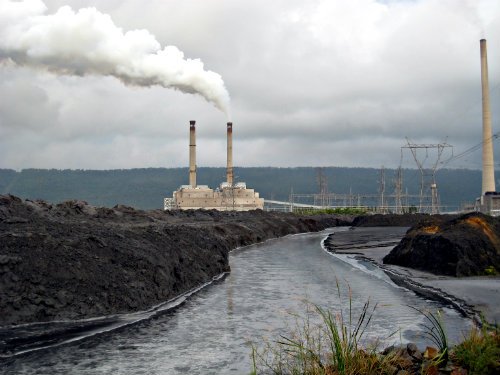 The EPA promulgated the Steam Electric Power Generating Effluent Guidelines and Standards (40 CFR Part 423Exit EPA’s website) in 1974, and amended the regulations in 1977, 1978, 1980, 1982, 2015, 2020, and 2024. The regulations cover wastewater discharges from power plants operating as utilities. The Steam Electric regulations are incorporated into NPDES permits.
On this page: * What is Steam Electric Power Generating? * Health and Environmental Impacts of Steam Electric Power Plant Discharges * Facilities Covered * Deadline Extensions Rule * 2024 Final Rule * 2020 Reconsideration Rule * 2015 Final Rule * Background Documents * Rulemaking History * Related Regulations * Additional Information
What is Steam Electric Power Generating?
Steam electric plants use nuclear or fossil fuels (such as coal, oil and natural gas) to heat water in boilers, which generates steam. The steam is used to drive turbines connected to electric generators. The plants generate wastewater in the form of chemical pollutants and thermal pollution (heated water) from their water treatment, power cycle, ash handling and air pollution control systems, as well as from coal piles, yard and floor drainage, and other miscellaneous wastes. Related Information * Stormwater Fact Sheet (Sector O)
These activities are included within the following NAICS codes: * 221112 – Fossil Fuel Electric Power Generation * 221113 – Nuclear Electric Power Generation
Note: the NAICS group listings are provided as a guide and do not define the coverage of the Steam Electric regulations. For precise definitions of coverage, see the applicability sections in 40 CFR Part 423Exit EPA’s website.
Health and Environmental Impacts of Steam Electric Power Plant Discharges
Steam electric power plants discharge large volumes of wastewater containing pollutants into waters of the United States. The discharges include toxic and bioaccumulative pollutants (selenium, mercury, arsenic, nickel), halogen compounds (bromide, chloride, iodide), nutrients, and total dissolved solids which can cause health and environmental harm through surface water and fish tissue contamination. The pollutants discharged by this industry can cause severe health and environmental problems in the form of cancer and non-cancer risks in humans, lowered IQ among children, and deformities and reproductive harm in fish and wildlife. Many of these pollutants, once in the environment, remain there for years. Due to their close proximity to these discharges and relatively high consumption of fish, some minority and low-income communities have greater exposure to, and are, therefore, at greater risk from, pollutants in steam electric power plant discharges.
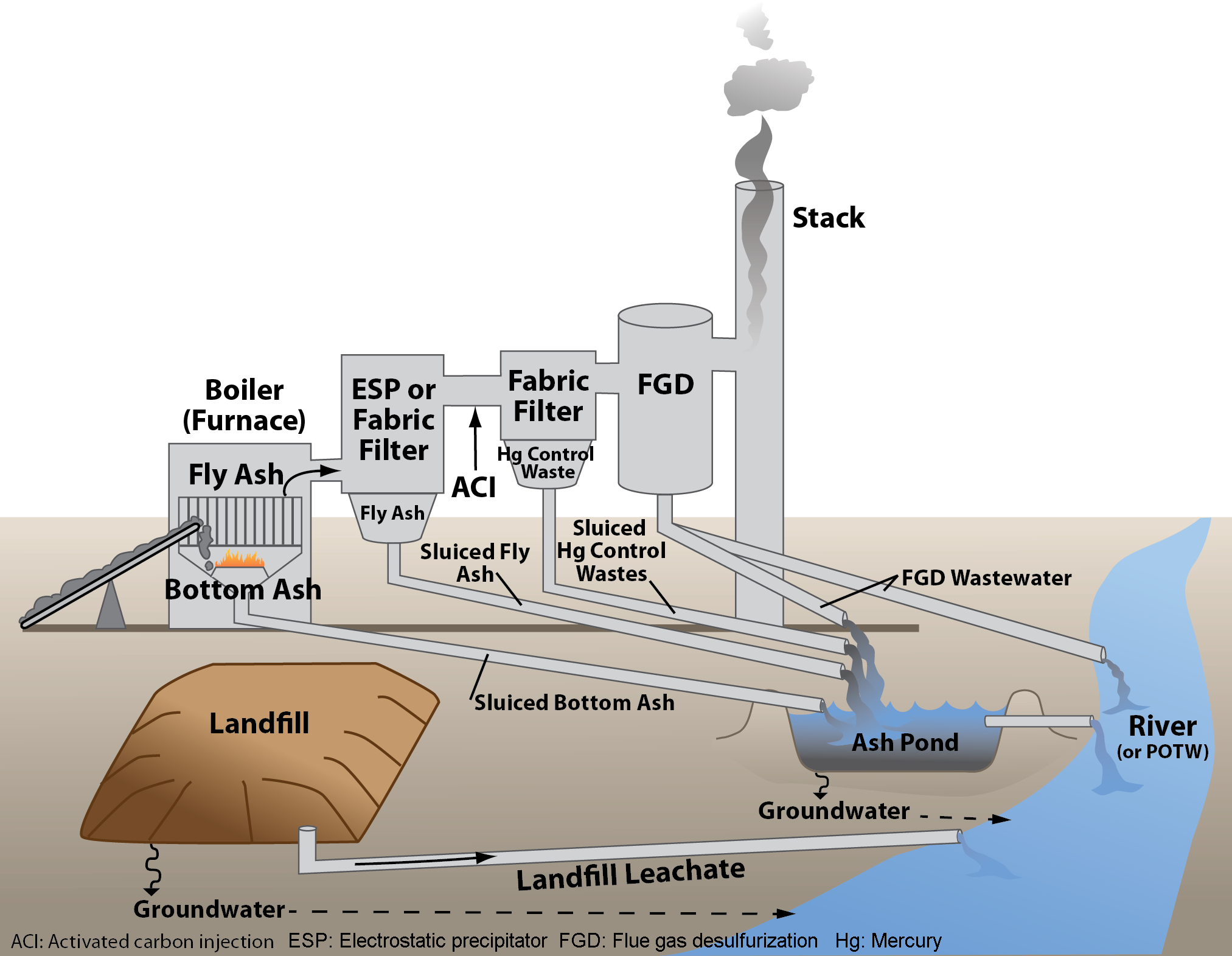 Key Wastestreams - Click to enlarge
There are affordable technologies that are widely available, and already in place at some plants, which reduce or eliminate steam electric power plant discharges. By employing improved technologies to reduce pollutant discharges of wastewater through effluent limitations, potential health benefits come in the form of reduced morbidity and mortality, lower cancer rates, increased IQ among children, and improved water quality. The ecological impacts from reducing power plant discharges include habitat benefits for fresh and saltwater plants, invertebrates, fish, and amphibians, as well as for terrestrial wildlife and birds that prey on aquatic organisms. Overall, implementing wastewater limitations on the steam electric power plants provides benefits to society by enhancing surface water quality and reducing health risks.
Key Wastestreams - Click to enlarge
There are affordable technologies that are widely available, and already in place at some plants, which reduce or eliminate steam electric power plant discharges. By employing improved technologies to reduce pollutant discharges of wastewater through effluent limitations, potential health benefits come in the form of reduced morbidity and mortality, lower cancer rates, increased IQ among children, and improved water quality. The ecological impacts from reducing power plant discharges include habitat benefits for fresh and saltwater plants, invertebrates, fish, and amphibians, as well as for terrestrial wildlife and birds that prey on aquatic organisms. Overall, implementing wastewater limitations on the steam electric power plants provides benefits to society by enhancing surface water quality and reducing health risks.
Facilities Covered
The Steam Electric Power Generating Effluent Guidelines apply to a major portion of the electric power industry. These are plants primarily engaged in the generation of electricity for distribution and sale which results primarily from a process utilizing fossil-type fuel or nuclear fuel in conjunction with a thermal cycle employing the steam water system as the thermodynamic medium. There are approximately 914 of these facilities located throughout the United States.
Deadline Extensions Rule
The EPA's action extends compliance deadlines for the ELGs that apply to coal-fired power plants. * Deadlines Extension Rule (December 23, 2025)
2024 Final Rule
The EPA finalized a supplemental rulemaking to strengthen discharge limits for flue gas desulfurization wastewater, bottom ash transport water, combustion residual leachate, and legacy wastewaters. * 2024 Final Rule (April 24, 2024)
2020 Reconsideration Rule
The EPA revised the requirements for two waste streams: flue gas desulfurization (FGD) wastewater and bottom ash (BA) transport water; revised the voluntary incentives program for FGD wastewater; added subcategories; and established new compliance dates. * 2020 Final Rule (October 13, 2020)
2015 Final Rule
The 2015 final rule set the first federal limits on the levels of toxic metals in wastewater that can be discharged from power plants. * Final Rule (November 3, 2015)
Background Documents
2009 Detailed Study
The EPA conducted a study which provided an industry overview, data on wastewater characteristics of coal-fired plants, a description of applicable wastewater treatment technologies, a discussion of trends in the use of air pollution controls, and a description of environmental impacts. * Steam Electric Power Generating Point Source Category: Final Detailed Study Report (2009)
Laboratory Analysis of Flue Gas Desulfurization (FGD) Wastewater
Rulemaking History
2024 Amendment
- Final Rule (April 24, 2024)
2020 Amendment
- Final Rule (October 13, 2020)
2015 Amendment
- Final Rule (November 3, 2015)
1982 Amendment
Revised BPT, BAT, BCT, NSPS, PSES and PSNS requirements
* Documents, including:
* Final Rule (November 19, 1982)
* Development Document
Industry description, wastewater characterization, treatment technologies, regulatory compliance cost estimates, and pollutant loadings for the final rule
* Proposed Rule (October 14, 1980)
1978 and 1980 Amendments
Amended BPT variance clause * Documents, including: * Final Rule (September 17, 1980) * Final Rule (September 29, 1978)
1977 Amendment
Established PSES requirements * Documents, including: * Final Rule (March 23, 1977) * Development Document (Pretreatment Supplement) * Proposed Rule (October 8, 1974)
1974 Initial Rulemaking
Established BPT, BAT, NSPS and PSNS requirements
* Documents, including:
* Final Rule (October 8, 1974)
* Development Document
Industry description, wastewater characterization, treatment technologies, regulatory compliance cost estimates, and pollutant loadings for the final rule
* Proposed Rule (March 4, 1974)
Related Regulations
- Disposal of Coal Combustion Residuals under Resource Recovery and Conservation Act (RCRA)
- Greenhouse Gas Standards and Guidelines for Fossil Fuel-Fired Power Plants under the Clean Air Act (CAA)
- Mercury and Air Toxics Standards under the CAA
Additional Information
For additional information regarding the Steam Electric Power Generating Effluent Guidelines, please contact Richard Benware (benware.richard@epa.gov) or 202-566-1369.
Effluent Guidelines
Open Sidenav Menu Close Sidenav Menu Contact Us About Effluent Guidelines Contact Us About Effluent Guidelines to ask a question, provide feedback, or report a problem. Last updated on December 23, 2025 Welcome! Please share your feedback on how we can make www.epa.gov work better for you. A red asterisk (*) indicates a required field.
Success
Thank you. Your feedback has been received.
Error
alert message Required Questions - page 1 of 2 question_55203_answer_01 How would you rate your experience on www.epa.gov today? *
0 Stars 1 Star 2 Stars 3 Stars 4 Stars 5 Stars Please explain the reason for your rating. * 400 characters allowed Would you like to take two more minutes to answer more questions to help us improve our services? Yes, keep going → No, only submit these responses Optional questions - page 2 of 2 How would you describe yourself? Business Government employee Scientist Student Other Enter other text Please tell us why you visited www.epa.gov today. 400 characters allowed Did you visit www.epa.gov to accomplish a specific task? If yes, please explain why you were able or unable to accomplish your task. 400 characters allowed How can we make www.epa.gov a more helpful website? 400 characters allowed Submit [NPDES]: National Pollutant Discharge Elimination System [NAICS]: North American Industrial Classification System [BPT]: Best Practicable Technology [BAT]: Best Available Technology [BCT]: Best Conventional Technology [NSPS]: New Source Performance Standards [PSES]: Pretreatment Standards for Existing Sources [PSNS]: Pretreatment Standards for New Sources []: required