 Official websites use .gov
A .gov website belongs to an official government organization in the United States.
 Secure .gov websites use HTTPS
A lock (Lock A locked padlock) or https:// means you’ve safely connected to the .gov website. Share sensitive information only on official, secure websites.
Pulp, Paper and Paperboard Effluent Guidelines
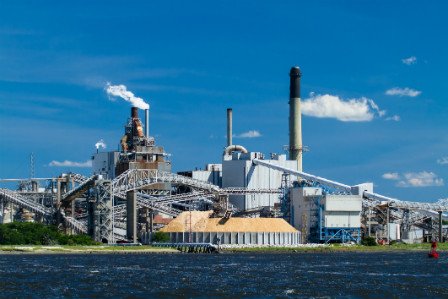 The EPA promulgated initial Effluent Guidelines and Standards for the Pulp, Paper and Paperboard category (40 CFR Part 430Exit EPA’s website) in 1974 and 1977, amended the regulations in 1982 and 1986, and promulgated a major amendment covering toxic pollutants in 1998. The Effluent Guidelines are incorporated into NPDES permits for direct dischargersdirect dischargersA point source that discharges pollutants to waters of the United States, such as streams, lakes, or oceans., and permits or other control mechanisms for indirect dischargersindirect dischargersA facility that discharges pollutants to a publicly owned treatment works (municipal sewage treatment plant). (see Pretreatment Program).
The 1998 "Cluster Rule" also promulgated toxic air emission standards (NESHAPs) for the industry under the Clean Air Act (see Pulp and Paper Production (MACT I & III)).
On this page:
* Pollutants and Subcategories
* Guidance Document
* Rulemaking History
* Additional Information
The EPA promulgated initial Effluent Guidelines and Standards for the Pulp, Paper and Paperboard category (40 CFR Part 430Exit EPA’s website) in 1974 and 1977, amended the regulations in 1982 and 1986, and promulgated a major amendment covering toxic pollutants in 1998. The Effluent Guidelines are incorporated into NPDES permits for direct dischargersdirect dischargersA point source that discharges pollutants to waters of the United States, such as streams, lakes, or oceans., and permits or other control mechanisms for indirect dischargersindirect dischargersA facility that discharges pollutants to a publicly owned treatment works (municipal sewage treatment plant). (see Pretreatment Program).
The 1998 "Cluster Rule" also promulgated toxic air emission standards (NESHAPs) for the industry under the Clean Air Act (see Pulp and Paper Production (MACT I & III)).
On this page:
* Pollutants and Subcategories
* Guidance Document
* Rulemaking History
* Additional Information
Pollutants and Subcategories
Related Information * Stormwater fact sheet (Sector B)
Regulated Pollutants
The regulated pollutants vary by subcategory, and include: Conventional pollutants * biochemical oxygen demand * suspended solids * pH (abnormally high or low)
Priority pollutants * 2,4,6-trichlorophenol * 2,3,7,8-tetrachlorodibenzo-p -dioxin (TCDD)
- pentachlorophenol
- zinc
Nonconventional pollutants * adsorbable organic halides (AOX) * chemical oxygen demand * chloroform * trichlorosyringol * 2,4,5-trichlorophenol * 3,4,5-trichlorocatechol * 3,4,5-trichloroguaiacol
- 3,4,6-trichlorocatechol
- 3,4,6-trichloroguaiacol
- 4,5,6-trichloroguaiacol
- tetrachlorocatechol
- tetrachlorguaiacol
- 2,3,4,6-tetrachlorophenol
- 2,3,7,8-tetrachlorodibenzofuran (TCDF)
Facilities Covered
Pulp, Paper and Paperboard Subcategories
| Subpart | Processes Included |
| --- | --- |
| A. Dissolving KraftExit EPA’s website | Dissolving pulp at kraft mills |
| B. Bleached Papergrade Kraft and SodaExit EPA’s website | Market pulp at bleached kraft mills; paperboard, coarse paper, and tissue paper at bleached kraft mills; pulp and fine papers at bleached kraft mills; and pulp and paper at soda mills |
| C. Unbleached KraftExit EPA’s website | Pulp and paper at unbleached kraft mills including linerboard or bag paper and other mixed products; pulp and paper using the unbleached kraft-neutral sulfite semi-chemical (cross recovery) process; and pulp and paper at combined unbleached kraft and semi-chemical mills, wherein the spent semi-chemical cooking liquor is burned within the unbleached kraft chemical recovery system |
| D. Dissolving SulfiteExit EPA’s website | Pulp at dissolving sulfite mills for the following grades: nitration, viscose, cellophane, and acetate |
| E. Papergrade SulfiteExit EPA’s website | Calcium, magnesium, or sodium-based pulps; ammonium-based pulps; specialty grade pulps. Pulp and paper at papergrade sulfite mills where blow pit pulp washing techniques are used and pulp and paper at papergrade sulfite mills where vacuum or pressure drums are used to wash pulp |
| F. Semi-ChemicalExit EPA’s website | Pulp and paper at semi-chemical mills using an ammonia base or a sodium base |
| G. Mechanical PulpExit EPA’s website | Pulp and paper at groundwood chemi-mechanical mills; pulp and paper at groundwood mills through the application of the thermo-mechanical process; pulp and coarse paper, molded pulp products, and newsprint at groundwood mills; and pulp and fine paper at groundwood mills |
| H. Non-Wood Chemical PulpExit EPA’s website | Pulp and paper at non-wood chemical pulp mills |
| I. Secondary Fiber DeinkExit EPA’s website | Pulp and paper at deink mills including fine papers, tissue papers, or newsprint |
| J. Secondary Fiber Non-DeinkExit EPA’s website | Paperboard from wastepaper from noncorrugating medium furnish or from corrugating medium furnish; tissue paper from wastepaper without deinking at secondary fiber mills; molded products from wastepaper without deinking; and builders' paper and roofing felt from wastepaper |
| K. Fine and Lightweight Papers from Purchased PulpExit EPA’s website | Fine papers at nonintegrated mills using wood fiber furnish or cotton fiber furnish; and lightweight papers at nonintegrated mills or lightweight electrical papers at nonintegrated mills |
| L. Tissue, Filter, Non‑woven, and Paperboard from Purchased PulpExit EPA’s website | Tissue papers at nonintegrated mills; filter and non-woven papers at nonintegrated mills; and paperboard at nonintegrated mills |
Best Management Practices
For subparts B and E: * control of leaks and spills * control intentional diversions of spent pulping liquor, soap, and turpentine
Guidance Document
- Permit Guidance Document (2000)
Guidance for NPDES permit authorities and POTWs in implementing the 1998 amendments to Subparts B and E
Rulemaking History
2007 Amendment
Approved an analytical method for measurement of chlorinated phenolics. * Final ruleExit EPA’s website (March 12, 2007)
2002 Amendment
Technical amendment. Reduced monitoring requirements for chloroform for Subpart B facilities; allows demonstration of compliance by self-certification. * Final ruleExit EPA’s website (September 19, 2002)
1999 Amendment
Follow-up to 1998 rule with milestones plan requirements * Final ruleExit EPA’s website (July 7, 1999)
1998 Amendments
Minor Corrections
- Final ruleExit EPA’s website (August 7, 1998)
Cluster Rule
Established effluent limitations for toxic pollutants in Subparts B and E; merged Builders Paper Category (formerly 40 CFR Part 431)
* Final ruleExit EPA’s website (April 15, 1998)
* Development Document (1997)
Industry description, wastewater characterization, treatment technologies, regulatory compliance cost estimates and pollutant loadings for the final rule
* Technical Support Document for Best Management Practices (1997)
BMPs for bleached papergrade kraft and soda, and papergrade sulfite mills. The BMPs establish controls that reduce the release of toxic, conventional, and nonconventional pollutants to surface waters.
* Economic Analysis
* Proposed rule (December 17, 1993)
1986 Amendment
BCT * Final rule (December 17, 1986)
1982 Amendment
All standards except BCT
* Final rule (November 18, 1982)
* Development Document (October 1982)
Industry description, wastewater characterization, treatment technologies, regulatory compliance cost estimates and pollutant loadings for the final rule
1977 Amendment
- Final rule (January 6, 1977)
- Interim final rule (February 19, 1976)
1974 Initial Rulemaking
- Pulp, Paper & Paperboard Category
- Final rule (May 29, 1974)
- Builders Paper Category
- Final rule (May 9, 1974)
Additional Information
For additional information regarding Pulp, Paper and Paperboard Effluent Guidelines, please contact Ahmar Siddiqui (siddiqui.ahmar@epa.gov) or 202-566-1044.
Effluent Guidelines
Open Sidenav Menu Close Sidenav Menu Contact Us About Effluent Guidelines Contact Us About Effluent Guidelines to ask a question, provide feedback, or report a problem. Last updated on March 24, 2026 Welcome! Please share your feedback on how we can make www.epa.gov work better for you. A red asterisk (*) indicates a required field.
Success
Thank you. Your feedback has been received.
Error
alert message Required Questions - page 1 of 2 question_55203_answer_01 How would you rate your experience on www.epa.gov today? *
0 Stars 1 Star 2 Stars 3 Stars 4 Stars 5 Stars Please explain the reason for your rating. * 400 characters allowed Would you like to take two more minutes to answer more questions to help us improve our services? Yes, keep going → No, only submit these responses Optional questions - page 2 of 2 How would you describe yourself? Business Government employee Scientist Student Other Enter other text Please tell us why you visited www.epa.gov today. 400 characters allowed Did you visit www.epa.gov to accomplish a specific task? If yes, please explain why you were able or unable to accomplish your task. 400 characters allowed How can we make www.epa.gov a more helpful website? 400 characters allowed Submit [NPDES]: National Pollutant Discharge Elimination System [NESHAPs]: National Emission Standards for Hazardous Air Pollutants [POTWs]: publicly owned treatment works [BCT]: Best Conventional Pollutant Control Technology []: required