 Official websites use .gov
A .gov website belongs to an official government organization in the United States.
 Secure .gov websites use HTTPS
A lock (Lock A locked padlock) or https:// means you’ve safely connected to the .gov website. Share sensitive information only on official, secure websites.
Porcelain Enameling Effluent Guidelines
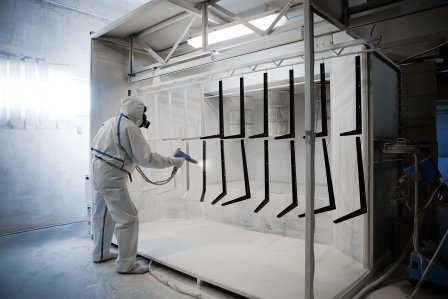 The EPA promulgated the Porcelain Enameling Effluent Guidelines and Standards (40 CFR Part 466Exit EPA’s website) in 1982 and amended the regulation in 1985. The regulation covers direct and indirect dischargers. The Effluent Guidelines and Standards are incorporated into NPDES permits for direct dischargersdirect dischargersA point source that discharges pollutants to waters of the United States, such as streams, lakes, or oceans., and permits or other control mechanisms for indirect dischargersindirect dischargersA facility that discharges pollutants to a publicly owned treatment works (municipal sewage treatment plant). (see Pretreatment Program).
On this page:
* What is the Porcelain Enameling Industry?
* Facilities Covered
* Related Categories
* Rulemaking History
* Additional Information
The EPA promulgated the Porcelain Enameling Effluent Guidelines and Standards (40 CFR Part 466Exit EPA’s website) in 1982 and amended the regulation in 1985. The regulation covers direct and indirect dischargers. The Effluent Guidelines and Standards are incorporated into NPDES permits for direct dischargersdirect dischargersA point source that discharges pollutants to waters of the United States, such as streams, lakes, or oceans., and permits or other control mechanisms for indirect dischargersindirect dischargersA facility that discharges pollutants to a publicly owned treatment works (municipal sewage treatment plant). (see Pretreatment Program).
On this page:
* What is the Porcelain Enameling Industry?
* Facilities Covered
* Related Categories
* Rulemaking History
* Additional Information
What is the Porcelain Enameling Industry?
Porcelain enameling is the application of glass-like coatings to metals such as steel, cast iron, aluminum, or copper. The purpose of the coating is to improve resistance to chemicals, abrasion, and water and to improve thermal stability, electrical resistance, and appearance. The coating applied to the workpiece is a water-based slurry called a "slip" and is composed of one of many combinations of frit (glassy-like material), clays, coloring oxides, water, and special additives, such as suspending agents. These vitreous inorganic coatings are applied to the metal by a variety of methods such as spraying, dipping, and flow coating, and are bonded to the base metal at temperatures in excess of 500 °C (over 1000 °F). At these temperatures, finely ground enamel frit particles fuse and flow together to form the permanently bonded, hard porcelain coating. At the time of the 1982 rulemaking there were approximately 130 porcelain enameling facilities in the United States. Porcelain enameling activities are included within the following NAICS groups: * 332439: Other Metal Container Manufacturing * 332812: Metal Coating, Engraving (except Jewelry and Silverware), and Allied Services to Manufacturers * 332998: Enameled Iron and Metal Sanitary Ware Manufacturing * 335221: Household Cooking Appliance Manufacturing * 335222: Household Refrigerator and Home Freezer Manufacturing * 335224: Household Laundry Equipment Manufacturing * 335228: Other Major Household Appliance Manufacturing
Note: The NAICS listing is provided as a guide and does not define the coverage of the Porcelain Enameling category. For precise definitions of coverage, see the Applicability sections in 40 CFR Part 466Exit EPA’s website.
Manufacturing Techniques and Wastestreams
There are two major groups of standard process steps used in manufacturing porcelain enameled materials: * Surface preparation is for removal of soil, oil, corrosion, and similar dirt from the basis material. The clean surface allows the porcelain enamel to bond well with the basis material * Coating , including ball milling and enamel application. Ball milling is performed to mix and grind frit and other raw materials, forming an enamel slip of appropriate consistency for a particular application.
Water Use
The cleaning processes for removing oil and dirt employ water based alkaline cleaners. Acid pickling solutions are used to remove oxides and corrosion and to etch the surface of the workpiece. Water is also used to rinse the basis material after it has been cleaned by the above listed processes. A water solution of nickel salts is used in nickel flash operations in the steel subcategory. The ball milling operation uses water for washing out the ball mills between mixing batches and for cooling the ball mills. During application of the porcelain enamel slip, water may be used as a curtain device for entrapping waste slip from overspray. The characteristics of the wastewater generated by a porcelain enameling facility may vary depending on basis material cleaning and coating.
Significant Pollutants
The most important pollutants or pollutant parameters are as follows: * Toxic metal pollutants: antimony, arsenic, cadmium, chromium, copper, lead, nickel, selenium, and zinc * Conventional pollutants: suspended solids, pH (abnormally high or low), and oil & grease * Unconventional pollutants: aluminum, cobalt, fluoride, iron, manganese, phosphorus, and titanium.
Because of the amount of toxic metals present, the sludges generated during wastewater treatment generally contain substantial amounts of toxic metals.
Facilities Covered
The subcategories in Part 466 are defined as porcelain enameling on: * Steel Basis Material (Subpart AExit EPA’s website) * Cast Iron Basis Material (Subpart BExit EPA’s website) * Aluminum Basis Material (Subpart CExit EPA’s website) * Copper Basis Material (Subpart DExit EPA’s website)
The regulation does not apply to porcelain enameling on precious metals.
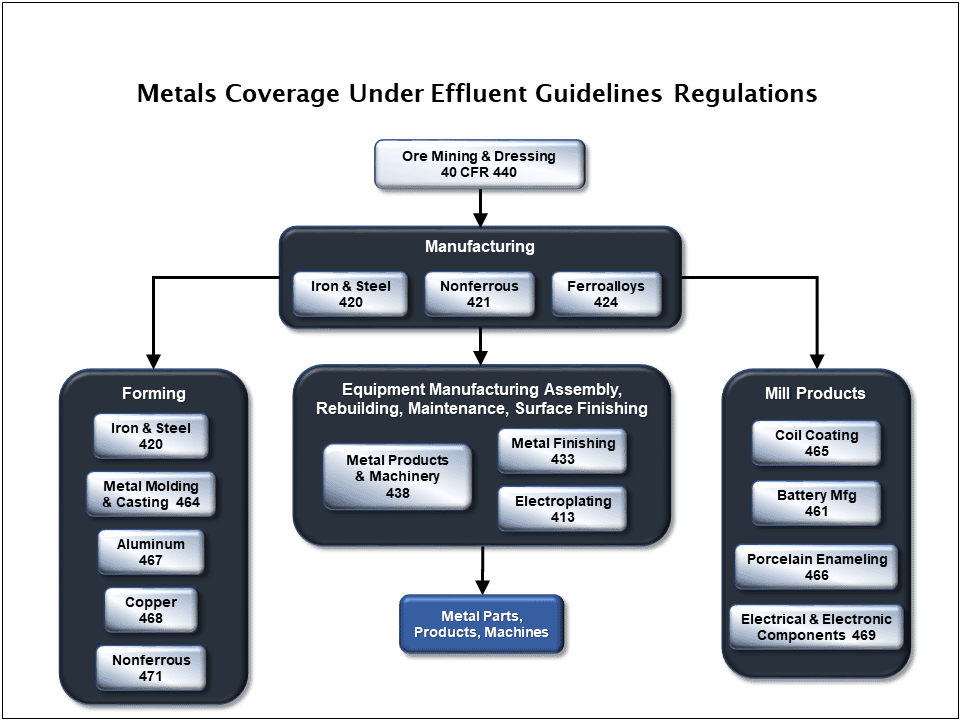 Metals coverage under Effluent Guidelines
- Click to enlarge
Related Categories
Rulemaking History
1985 Amendment
Promulgated pursuant to litigation * Final Rule (September 6, 1985)
1982 Initial Rulemaking
- Documents, including:
- Final Rule (November 24, 1982)
- Development Document (November 1982)
Industry description, wastewater characterization, treatment technologies, regulatory compliance cost estimates and pollutant loadings for the final rule - Proposed Rule (January 27, 1981)
Additional Information
For additional information regarding the Porcelain Enameling Effluent Guidelines, please contact Anthony Tripp (tripp.anthony@epa.gov) or 202-566-1419.
Effluent Guidelines
Open Sidenav Menu Close Sidenav Menu Contact Us About Effluent Guidelines Contact Us About Effluent Guidelines to ask a question, provide feedback, or report a problem. Last updated on June 3, 2025 Welcome! Please share your feedback on how we can make www.epa.gov work better for you. A red asterisk (*) indicates a required field.
Success
Thank you. Your feedback has been received.
Error
alert message Required Questions - page 1 of 2 question_55203_answer_01 How would you rate your experience on www.epa.gov today? *
0 Stars 1 Star 2 Stars 3 Stars 4 Stars 5 Stars Please explain the reason for your rating. * 400 characters allowed Would you like to take two more minutes to answer more questions to help us improve our services? Yes, keep going → No, only submit these responses Optional questions - page 2 of 2 How would you describe yourself? Business Government employee Scientist Student Other Enter other text Please tell us why you visited www.epa.gov today. 400 characters allowed Did you visit www.epa.gov to accomplish a specific task? If yes, please explain why you were able or unable to accomplish your task. 400 characters allowed How can we make www.epa.gov a more helpful website? 400 characters allowed Submit [NAICS]: North American Industrial Classification System [*]: required