 Official websites use .gov
A .gov website belongs to an official government organization in the United States.
 Secure .gov websites use HTTPS
A lock (Lock A locked padlock) or https:// means you’ve safely connected to the .gov website. Share sensitive information only on official, secure websites.
Oil and Gas Extraction Effluent Guidelines
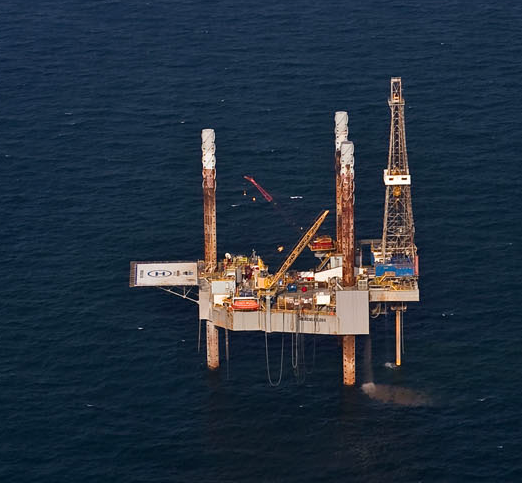 The EPA promulgated the Oil and Gas Extraction Effluent Guidelines and Standards (40 CFR Part 435Exit EPA’s website) in 1979 and amended the regulations in 1993, 1996, 2001, and 2016. The regulations cover wastewater discharges from field exploration, drilling, production, well treatment, and well completion activities. These activities take place on land, in coastal areas, and offshore.
The Oil and Gas regulations apply to conventional and unconventional oil and gas extraction, with the exception of coalbed methane. The regulatory requirements are incorporated into NPDES permits.
The EPA promulgated the Oil and Gas Extraction Effluent Guidelines and Standards (40 CFR Part 435Exit EPA’s website) in 1979 and amended the regulations in 1993, 1996, 2001, and 2016. The regulations cover wastewater discharges from field exploration, drilling, production, well treatment, and well completion activities. These activities take place on land, in coastal areas, and offshore.
The Oil and Gas regulations apply to conventional and unconventional oil and gas extraction, with the exception of coalbed methane. The regulatory requirements are incorporated into NPDES permits.
On this page: * What is the Oil and Gas Extraction Industry? * Facilities Covered * Study of the Agricultural and Wildlife Water Use Subcategory * Pollutant Concentration Tool for Agricultural and Wildlife Water Use * Unconventional Extraction - Pretreatment Standards * Study of Oil and Gas Extraction Wastewater Management - 2019 * Coalbed Methane Extraction * Rulemaking History * Additional Information
What is the Oil and Gas Extraction Industry?
Related Information * NPDES policy documents for oil and gas facilities * Stormwater fact sheet (Sector I)
Oil and Gas Extraction is the exploration and production of petroleum and natural gas from wells. The industry generates wastewater from the water extracted from the geological formations and from chemicals used during exploration, well drilling, and production of oil and gas. These activities are included within NAICS code 211111, Crude Petroleum and Natural Gas Extraction. (Note: the NAICS group listings are provided as a guide and do not define the coverage of the Oil and Gas regulations. For precise definitions of coverage, see the applicability sections in 40 CFR Part 435Exit EPA’s website.)
Facilities Covered
The Oil and Gas regulations apply to facilities organized into the following five subcategories: * Offshore (Subpart AExit EPA’s website) * Onshore (Subpart CExit EPA’s website) * Coastal (Subpart DExit EPA’s website) * Agricultural and Wildlife Water Use (Subpart EExit EPA’s website) * Stripper Wells (Subpart FExit EPA’s website)
Additionally, Subpart BExit EPA’s website is currently reserved and Subpart GExit EPA’s website contains general provisions for the category.
Wastestreams Covered
| All Subparts | Subparts A & E Only |
| --- | --- |
| Produced waterProduced waterThe fluid brought up from the hydrocarbon-bearing strata during the extraction of oil and gas, and includes, where present, formation water, injection water, and any chemicals added downhole or during the oil/water separation process. [40 CFR 435.11(bb); 435.33(a)(2)(v); 435.41(bb)] | Domestic |
| Produced sandProduced sandThe slurried particles used in hydraulic fracturing, the accumulated formation sands and scales particles generated during production. Produced sand also includes desander discharge from the produced water waste stream, and blowdown of the water phase from the produced water treating system. [[40 CFR 435.11(aa); 435.33(a)(2)(iv); 435.41(aa)] | Sanitary |
| Drilling fluids | Deck drainage |
| Drill cuttings | |
| Well treatment, workover & completion fluids | |
Study of the Agricultural and Wildlife Water Use Subcategory
The regulations at 40 CFR 435 Subpart E allow for discharge of produced water from onshore facilities into navigable waters west of the 98th meridian if the produced water has a use in agriculture or wildlife propagation. These facilities are engaged in the production, drilling, well completion, and well treatment in the oil and gas extraction industry. The EPA promulgated the Subpart E regulations in 1979. Many changes have occurred in the industry since that time. The Agency has completed a study that evaluated whether there are economically achievable and available treatment technologies that can reduce the discharge of pollutants from this industry. Based on the study, the EPA has announced a rulemaking to revise the Subpart E regulations and to expand produced water reuse opportunities nationwide. The Agency expects to publish a report on the study soon. * Press release (March 12, 2025)
For additional information on the study, please contact Sean Dempsey (dempsey.sean@epa.gov) at 202-564-5088.
Pollutant Concentration Tool for Agricultural and Wildlife Water Use
The regulations in Subpart E allow for discharge of produced water west of the 98th meridian, if the produced water is of good enough quality to be used for wildlife or livestock watering or other agricultural uses and the produced water is actually put to such use during periods of discharge. This tool provides pollutant concentration data reflecting various uses taken from the scientific literature. The tool can be used by NPDES permitting authorities and others to inform what levels of pollutants contained in produced water may be protective of various beneficial uses. * (4.11 MB, February 2024)
Note that using the Pollutant Concentration Tool requires the use of macros in Microsoft Excel. Instructions for turning on macros can be found hereExit EPA’s website.
Unconventional Extraction - Pretreatment Standards
The EPA established pretreatment standards under Subpart C in 2016. These standards prohibit discharges of wastewater pollutants from onshore unconventional oil and gas (UOG) extraction facilities to publicly owned treatment works. * Final Rule (June 2016)
Study of Oil and Gas Extraction Wastewater Management - 2019
The EPA conducted a holistic study of the management of produced water from onshore oil and gas wells. The study did not focus specifically on any one existing effluent guideline category. * Study of Oil and Gas Extraction Wastewater Management
Coalbed Methane Extraction Documents - 2010/2013
The EPA has not promulgated effluent limitations guidelines and standards for pollutant discharges from coalbed methane extraction facilities. The EPA had initiated a coalbed methane rulemaking, but announced its decision to discontinue this effort in Fall 2014. * Summary, Detailed Study Report (2010) and Support Documents (2013)
Rulemaking History
2016 Amendment
- Subpart C - Final Rule (June 2016)
2001 Amendment
Added requirements for the discharge of synthetic-based drilling fluids (SBFs) and other non-aqueous drilling fluids
* Clarification Memo: Standards for Controlling SBF Discharges (10/10/2003)
* Technical correction to January 22, 2001 ruleExit EPA’s website (June 8, 2001)
* Final RuleExit EPA’s website (January 22, 2001)
* Development Document
Describes industry processes, pollutants generated, available control & treatment technologies, the technical basis for the final rule, and costs of the rule
* Proposed RuleExit EPA’s website (February 3, 1999)
1996 Amendment
Added BAT, BCT, NSPS, PSES and PSNS, and revised BPT limitations for coastal facilities * Final RuleExit EPA’s website (December 16, 1996) * Development Document * Proposed RuleExit EPA’s website (February 17, 1995)
1993 Amendment
Added BAT, BCT and NSPS requirements for offshore facilities * Documents, including: * Final Rule (March 4, 1993) * Development Document * Proposed Rules: * March 13, 1991 * November 26, 1990 * October 21, 1988 (Notice of Data Availability) * August 26, 1985
1979 Initial Rulemaking
BPT limitations for Offshore; Onshore; Coastal; and Agricultural and Wildlife Water Use subcategories * Documents, including: * Final Rule (April 13, 1979) * Interim Final Rules: * October 13, 1976 (Subparts C through F) * September 15, 1975 (Subparts A and B) * Development Document
Additional Information
For additional information on the Oil and Gas Effluent Guidelines, please contact Sean Dempsey (dempsey.sean@epa.gov) or 202-564-5088.
Effluent Guidelines
Open Sidenav Menu Close Sidenav Menu Contact Us About Effluent Guidelines Contact Us About Effluent Guidelines to ask a question, provide feedback, or report a problem. Last updated on June 20, 2025 Welcome! Please share your feedback on how we can make www.epa.gov work better for you. A red asterisk (*) indicates a required field.
Success
Thank you. Your feedback has been received.
Error
alert message Required Questions - page 1 of 2 question_55203_answer_01 How would you rate your experience on www.epa.gov today? *
0 Stars 1 Star 2 Stars 3 Stars 4 Stars 5 Stars Please explain the reason for your rating. * 400 characters allowed Would you like to take two more minutes to answer more questions to help us improve our services? Yes, keep going → No, only submit these responses Optional questions - page 2 of 2 How would you describe yourself? Business Government employee Scientist Student Other Enter other text Please tell us why you visited www.epa.gov today. 400 characters allowed Did you visit www.epa.gov to accomplish a specific task? If yes, please explain why you were able or unable to accomplish your task. 400 characters allowed How can we make www.epa.gov a more helpful website? 400 characters allowed Submit [NPDES]: National Pollutant Discharge Elimination System [NAICS]: North American Industrial Classification System [BAT]: Best Available Technology [BCT]: Best Conventional Technology [NSPS]: New Source Performance Standards [PSES]: Pretreatment Standards for Existing Sources [PSNS]: Pretreatment Standards for New Sources [BPT]: Best Practicable Technology []: required