 Official websites use .gov
A .gov website belongs to an official government organization in the United States.
 Secure .gov websites use HTTPS
A lock (Lock A locked padlock) or https:// means you’ve safely connected to the .gov website. Share sensitive information only on official, secure websites.
Metal Molding and Casting (Foundries) Effluent Guidelines
 The EPA promulgated the Metal Molding and Casting (MMC) Effluent Guidelines and Standards (40 CFR Part 464Exit EPA’s website) in 1985. MMC facilities discharge process wastewater directly to surface waters or indirectly to surface waters through publicly owned treatment workspublicly owned treatment worksA treatment works that is owned by the state or municipality. (POTW). The MMC regulation covers 28 process segments (processes such as casting quench, grinding scrubber, mold cooling) in four subcategories: Aluminum Casting, Copper Casting, Ferrous Casting, and Zinc Casting. The Effluent Guidelines are incorporated into NPDES permits for direct dischargers, and permits or other control mechanisms for indirect dischargers (see Pretreatment Program).
On this page:
* What is Metal Molding and Casting?
* Facilities Covered
* Effluent Limitations and Technologies
* Rulemaking History
* Additional Information
The EPA promulgated the Metal Molding and Casting (MMC) Effluent Guidelines and Standards (40 CFR Part 464Exit EPA’s website) in 1985. MMC facilities discharge process wastewater directly to surface waters or indirectly to surface waters through publicly owned treatment workspublicly owned treatment worksA treatment works that is owned by the state or municipality. (POTW). The MMC regulation covers 28 process segments (processes such as casting quench, grinding scrubber, mold cooling) in four subcategories: Aluminum Casting, Copper Casting, Ferrous Casting, and Zinc Casting. The Effluent Guidelines are incorporated into NPDES permits for direct dischargers, and permits or other control mechanisms for indirect dischargers (see Pretreatment Program).
On this page:
* What is Metal Molding and Casting?
* Facilities Covered
* Effluent Limitations and Technologies
* Rulemaking History
* Additional Information
What is Metal Molding and Casting?
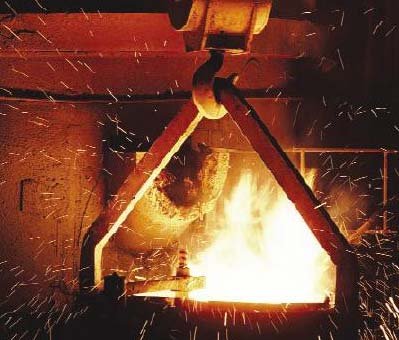
The facilities covered by the MMC regulation are often referred to as Foundries. A foundry produces metal castings from either ferrous or non-ferrous alloys. Metals are turned into parts by melting the metal into a liquid and pouring or injecting the metal in a mold, with the cavity of the mold representing, within close tolerances, the dimension of the finished product. One of the major advantages of this process is that intricate metal shapes, which are not easily obtained by any other method of fabrication, can be produced. Another advantage is the rapid translation of a projected design into a finished article.
Facilities Covered
Related Information * Stormwater fact sheet (Sector F: Primary Metals Facilities)
Covered facilities include both "job shops "—plants that sold 50 percent or more of their production to customers outside the corporate entity and "captive plants "—plants that sold 50 percent or more of their products internally or were used within the corporate entity. The scope of the regulated industry, as reported here, reflects the Agency's data at the time the regulation was issued in 1985, which, in turn, was based on data from the late 1970s.
At the time of promulgation, the EPA estimated that about 700 plants generated and discharged process wastewater. The facilities covered included both direct dischargers and plants that discharge to POTWs. The regulations for direct dischargers—those that discharge to surface waters—cover both continuous and intermittent discharges, although the effluent limitations vary by that distinction.
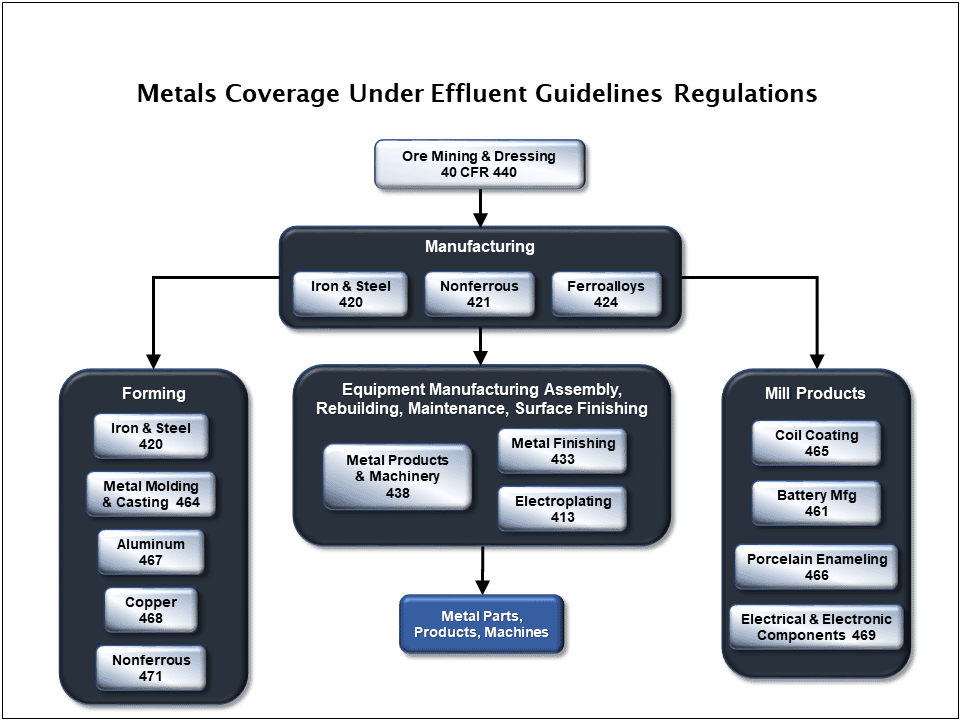 Metals coverage under Effluent Guidelines
- Click to enlarge
For indirect dischargers, which is the larger number of plants, POTWs may elect to establish mass-based or concentration-based standards based on the limitations or standards established in the regulations. Special care needs to be given to potential for overlap of applicability to Metal Molding and Casting facilities with other categories, such as Metal Finishing (note particularly the presence or absence of six "core operations" that must be present for operations to be covered by the Metal Finishing regulations (40 CFR Part 433Exit EPA’s website), Aluminum Forming (40 CFR Part 467Exit EPA’s website), and Copper Forming (40 CFR Part 468Exit EPA’s website). Please review the MMC Development Document regarding process operations and associated wastewaters covered in each subcategory (Sections 3 and 5) and the Appendices, notably Appendix C.
Subcategories
- Aluminum Casting (Subpart AExit EPA’s website)
- Copper Casting (Subpart BExit EPA’s website)
- Ferrous Casting (Subpart CExit EPA’s website)
- Zinc Casting (Subpart DExit EPA’s website)
Effluent Limitations and Technologies
For three of the process segments, the technology basis of the regulations is "no discharge of process wastewater pollutants." For the remaining 25 segments, the regulations are based on a combination of technologies such as high rate recycle, oil skimming, lime precipitation and settling, and filtration. Examples of the pollutants with effluent limits for Foundries are total suspended solids, phenols, copper, lead, and zinc, and also a bulk parameter (oil and grease) for monitoring total toxic organics (TTO) in all subcategories for indirect dischargers (see 40 CFR 464.03(a)Exit EPA’s website).
Rulemaking History
- Documents, including:
- Final Rule (October 30, 1985)
- Development Document
Describes industry processes, pollutants generated, available control and treatment technologies, the technical basis for the final rule, and costs of the rule. Includes guidance for implementing the regulations (Appendix C). - Notice of Data Availability (November 21, 1983)
- Proposed Rule (November 15, 1982)
Additional Information
For additional information regarding the MMC Effluent Guidelines, please contact Phillip Flanders (flanders.phillip@epa.gov) or 202-566-8323.
Effluent Guidelines
Open Sidenav Menu Close Sidenav Menu Contact Us About Effluent Guidelines Contact Us About Effluent Guidelines to ask a question, provide feedback, or report a problem. Last updated on June 3, 2025 Welcome! Please share your feedback on how we can make www.epa.gov work better for you. A red asterisk (*) indicates a required field.
Success
Thank you. Your feedback has been received.
Error
alert message Required Questions - page 1 of 2 question_55203_answer_01 How would you rate your experience on www.epa.gov today? *
0 Stars 1 Star 2 Stars 3 Stars 4 Stars 5 Stars Please explain the reason for your rating. * 400 characters allowed Would you like to take two more minutes to answer more questions to help us improve our services? Yes, keep going → No, only submit these responses Optional questions - page 2 of 2 How would you describe yourself? Business Government employee Scientist Student Other Enter other text Please tell us why you visited www.epa.gov today. 400 characters allowed Did you visit www.epa.gov to accomplish a specific task? If yes, please explain why you were able or unable to accomplish your task. 400 characters allowed How can we make www.epa.gov a more helpful website? 400 characters allowed Submit [NPDES]: National Pollutant Discharge Elimination System [*]: required