 Official websites use .gov
A .gov website belongs to an official government organization in the United States.
 Secure .gov websites use HTTPS
A lock (Lock A locked padlock) or https:// means you’ve safely connected to the .gov website. Share sensitive information only on official, secure websites.
Dental Effluent Guidelines
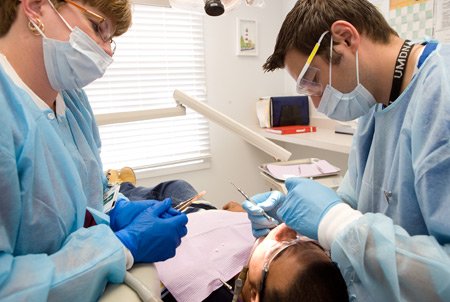 The EPA promulgated pretreatment standards in 2017 to reduce discharges of mercury from dental offices into publicly owned treatment workspublicly owned treatment worksA treatment works that is owned by the state or municipality. (POTWs). The Dental Office Category regulation is codified at 40 CFR Part 441Exit EPA’s website.
Dental offices discharge mercury present in amalgam used for fillings. Amalgam separators are a practical, affordable and readily available technology for capturing mercury and other metals before they are discharged into sewers that drain to POTWs. Once captured by a separator, mercury can be recycled.
The EPA expects compliance with this final rule will annually reduce the discharge of mercury by 5.1 tons as well as 5.3 tons of other metals found in waste dental amalgam to POTWs.
On this page:
* Background
* Frequent Questions
* Reporting Requirements
* Documents
* Additional information
The EPA promulgated pretreatment standards in 2017 to reduce discharges of mercury from dental offices into publicly owned treatment workspublicly owned treatment worksA treatment works that is owned by the state or municipality. (POTWs). The Dental Office Category regulation is codified at 40 CFR Part 441Exit EPA’s website.
Dental offices discharge mercury present in amalgam used for fillings. Amalgam separators are a practical, affordable and readily available technology for capturing mercury and other metals before they are discharged into sewers that drain to POTWs. Once captured by a separator, mercury can be recycled.
The EPA expects compliance with this final rule will annually reduce the discharge of mercury by 5.1 tons as well as 5.3 tons of other metals found in waste dental amalgam to POTWs.
On this page:
* Background
* Frequent Questions
* Reporting Requirements
* Documents
* Additional information
Background
Related Information * Mercury in Your Environment
Mercury is a potent neurotoxin that bioaccumulates in fish and shellfish. Mercury pollution is widespread and a global concern that originates from many diverse sources such as air deposition from municipal and industrial incinerators and combustion of fossil fuels. Key facts about dental clinics and mercury: * Dental clinics are the main source of mercury discharges to POTWs. * The EPA estimates about 103,000 dental offices use or remove amalgam in the United States; almost all of these send their wastewater to POTWs. * Dentists discharge approximately 5.1 tons of mercury each year to POTWs; most of this mercury is subsequently released to the environment.
Mercury-containing amalgam wastes may find their way into the environment when new fillings are placed or old mercury-containing fillings are drilled out and waste amalgam materials that are flushed into chair-side drains enter the wastewater stream. Mercury entering POTWs frequently partitions into the sludge, the solid material that remains after wastewater is treated. Mercury from waste amalgam therefore can make its way into the environment from the POTW through the incineration, landfilling, or land application of sludge or through surface water discharge.
Frequent Questions
For Dental Offices
For Control Authorities
Reporting Requirements
Dental offices that place or remove amalgam must operate and maintain an amalgam separator and must not discharge scrap amalgam or use certain kinds of line cleaners. Existing and new sources must submit a one-time compliance report to their pretreatment Control Authority. See the Federal Register notice for details.
Who is my Control Authority?
Your Control Authority is either a local wastewater utility, a state environmental agency, or a U.S. EPA regional office.
Dental offices in Alabama, Connecticut, Mississippi, Nebraska or Vermont
Your Control Authority is your state agency. * State Agency Contacts
Dental offices in all other states
Contact your EPA regional office, your local wastewater utility, or your state agency Pretreatment Coordinator to find out who your Control Authority is. * Pretreatment Program Contacts
Sample Compliance Report
This compliance report is an example. Your Control Authority may have a different form. Contact your Control Authority to determine which form to use. * (39.5 KB, November 2017) Free Viewers
Documents
Correction Notices
These Federal Register notices are corrections to the CFR text. The July 5, 2017 notice updates the June 26, 2017 notice. * CorrectionExit EPA’s website (July 5, 2017) * CorrectionExit EPA’s website (June 26, 2017)
Final Rule
- Final RuleExit EPA’s website (June 14, 2017)
- Technical and Economic Development Document (December 2016)
Industry description, wastewater characterization, treatment technologies, regulatory compliance cost estimates, economic impact analysis and pollutant loadings for the final rule - Fact Sheet
Additional documents related to this rulemaking can be found on EPA’s docket at regulations.govExit EPA’s website. The Docket ID Number is EPA-HQ-OW-2014-0693.
Proposed Rule
- Proposed RuleExit EPA’s website (October 22, 2014)
Additional Information
For additional information regarding the Dental Effluent Guidelines , please contact Paul Shriner (shriner.paul@epa.gov) or 202-566-1076.
Effluent Guidelines
Open Sidenav Menu Close Sidenav Menu Contact Us About Effluent Guidelines Contact Us About Effluent Guidelines to ask a question, provide feedback, or report a problem. Last updated on March 31, 2026 Welcome! Please share your feedback on how we can make www.epa.gov work better for you. A red asterisk (*) indicates a required field.
Success
Thank you. Your feedback has been received.
Error
alert message Required Questions - page 1 of 2 question_55203_answer_01 How would you rate your experience on www.epa.gov today? *
0 Stars 1 Star 2 Stars 3 Stars 4 Stars 5 Stars Please explain the reason for your rating. * 400 characters allowed Would you like to take two more minutes to answer more questions to help us improve our services? Yes, keep going → No, only submit these responses Optional questions - page 2 of 2 How would you describe yourself? Business Government employee Scientist Student Other Enter other text Please tell us why you visited www.epa.gov today. 400 characters allowed Did you visit www.epa.gov to accomplish a specific task? If yes, please explain why you were able or unable to accomplish your task. 400 characters allowed How can we make www.epa.gov a more helpful website? 400 characters allowed Submit []: required